Firefly Lane
Firefly LaneFirefly Lane is a country road in Snohomish that gives Tully Hart and Kate Mularkey’s lifelong friendship its name, its first meeting place, and its most enduring image. A lane that once seemed to lead nowhere becomes, through the girls’ shared imagination and repeated returns, a way of measuring how far their lives have traveled—and what remains when time and loss cannot undo their bond.
Setting and First Meaning
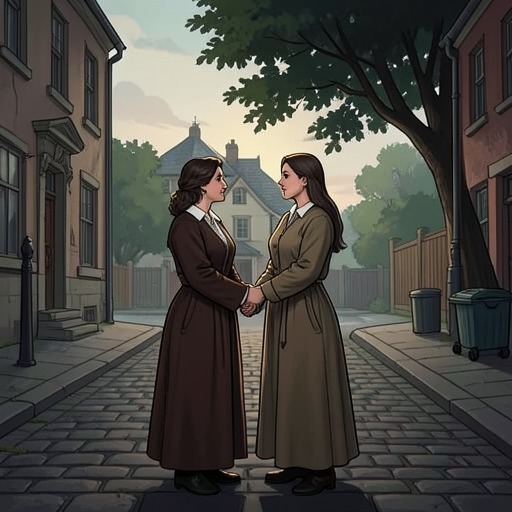
In the novel’s opening frame, Kate lies awake during a winter storm, unable to keep her memories at a distance. Her dreams return her to 1974: she is a teenager again, riding beside her best friend through darkness. The remembered road is a winding strip of asphalt, bordered by deep gullies of murky water and hillsides of shaggy grass, in a rugged landscape of blue and green. Before the girls meet, it appears to lead nowhere; its name refers to fireflies neither girl has seen.
The place’s physical modesty is part of its meaning. Firefly Lane is not introduced as a destination or a landmark with an established history, but as an ordinary country road that acquires significance when the girls begin to see it together. Tully wonders who named their street and remarks that she has never seen any fireflies. Kate speculates about the old bridge and the neighboring Missouri Street, imagining that its name might reflect homesickness or being lost. Tully offers another possibility: perhaps the street is magic, and the girls were meant to become friends. What had been a road that went nowhere becomes, in Kate’s words, their road.
The Girls’ Shared Place
At night, the girls slip out of their neighboring houses to meet on the lane. They also spend time on the banks of the Pilchuck River, smoking stolen cigarettes, crying over the lyrics of “Billy, Don’t Be a Hero,” and telling each other everything. Their friendship grows through these repeated confidences until those who know them think of them not as separate girls but as TullyandKate. Firefly Lane is thus a setting for intimacy, but also the point of origin for a shared identity that lasts more than three decades.
The road holds an early contrast between the limits of the girls’ immediate world and the breadth of what they imagine ahead. From a rise on the hill, they look beyond the trees, muddy potholes, and distant mountains to all the places they will someday go. Yet when Tully insists that the lane is theirs, she also argues that places themselves do not matter as much as the friendship they have made. The road does not need to take them somewhere else to become important; its meaning lies in the fact that they return to it together.
A Name for Memory and Promise
As their lives change, “Firefly Lane” becomes more than a geographical reference. Tully later asks Kate to remember it, using the name as a shorthand for memories they share and for a friendship that began when they were fourteen. When Tully recalls being abandoned by her mother and losing her grandmother, she tells Kate that Kate was the person who stayed: the one who held her hand and took her in. Calling them a team and insisting that they are forever friends, Tully makes the place-name carry the weight of both their shared past and a promise about the future.
The lane’s association with childhood persists alongside the women’s adult ambitions and altered lives. In 1981, as Kate’s years at the University of Washington approach their end, the bare cherry trees in the Quad mark the passing of time. During her senior year she works at Starbucks in Pike Place Market, while Tully spends more than twenty-five hours a week at her station internship; they still protect time to be together on weekends. The contrast between these changing routines and the repeated name of Firefly Lane makes the road a measure not of a static past but of a friendship carried forward through different stages of life.
Snow strengthens the lane’s fairy-tale associations. As a girl, Kate had prayed for snow; when it covers Firefly Lane, the familiar place looks to her like a setting where nothing could go wrong. In that moment she longs to tell her family that she has changed her mind, but does not. The remembered road’s promise of safety sits beside the life she must actually choose, giving the setting an emotional charge beyond nostalgia: it represents an imagined refuge, while the passage of time keeps carrying her away from the certainty it seems to offer.
Return and Recognition
A later return makes the gap between remembered place and present reality visible. After leaving by ferry for downtown Seattle, Tully is overwhelmed and drives instead to Snohomish. The town’s landmarks have changed; it has become a tourist stop filled with trendy cafes and upscale antique shops. Those changes matter little to her at first. Turning onto Firefly Lane, however, feels like being propelled into the past. The road remains powerful not because its surroundings have stayed untouched, but because it can bring the memories of the girls’ shared life sharply into the present.
The farmhouse associated with the Mularkey home has also changed. Mrs. Mularkey has transformed its ragged yard into an English-style garden, which glows gold in late autumn; red geraniums show in the porch light. These concrete alterations locate the old friendship in a present-day domestic landscape. The road leads Tully not simply back to an earlier version of Snohomish, but toward the people and history bound up with her adolescence.
In Kate’s final illness, the lane returns in dreams and in the memories Tully recounts at her bedside. Kate dreams that she is again riding at midnight along the same winding asphalt, past gullies and shaggy grass. The remembered road is still the place that seemed to go nowhere before the girls met, and still the place transformed by seeing it through each other’s eyes. Tully recalls the letters they wrote when she first left Snohomish, signed “Forever friends” or “Best friends forever,” and tells Kate stories of their bike rides down Summer Hill and their childhood adventures. Firefly Lane has become a name through which Tully can summon a shared history when Kate’s ability to recognize it is uncertain.
The Road as an Ending and a Legacy
The place reaches its most intimate meaning when Tully pushes Kate’s wheelchair over uneven grass near the beach. She narrates the motion as one of their childhood bike rides: the girls have sneaked out, are riding down Summer Hill without hands, and feel invincible. The physical journey is not literally a return to the lane, but it re-creates its defining experience—a companion beside Kate, motion through a landscape, and a shared memory that briefly makes the past present. Kate feels the breeze on her bare head, smells evergreen trees and rich earth, and laughs. For a moment she is a child again on Firefly Lane with her best friend beside her, believing she can fly.
After the ride, Kate looks up at Tully and remembers everything about them. Starlight resembles fireflies falling around them, bringing the lane’s name and its childhood magic into the present without requiring the original road to be there. The image gathers the book’s recurring contrast: the girls once found no fireflies on their street, yet friendship gave the name a light that could survive separation, changed places, and approaching death.
After Kate dies, “Dancing Queen” sweeps Tully back in time. Standing alone in the middle of the street, she knows that Kate is not simply gone from the life they built together: more than three decades of good and bad times, music, and memories remain theirs. She begins to dance. Firefly Lane’s final significance lies in that distinction between physical presence and enduring attachment. The road cannot prevent loss, but the memories made there allow Tully to carry their friendship forward; “Best friends forever” is no longer a guarantee that the girls will always be together in life, but a name for what their shared history has made permanent.